
July 18, 2026 · Packaging Guides
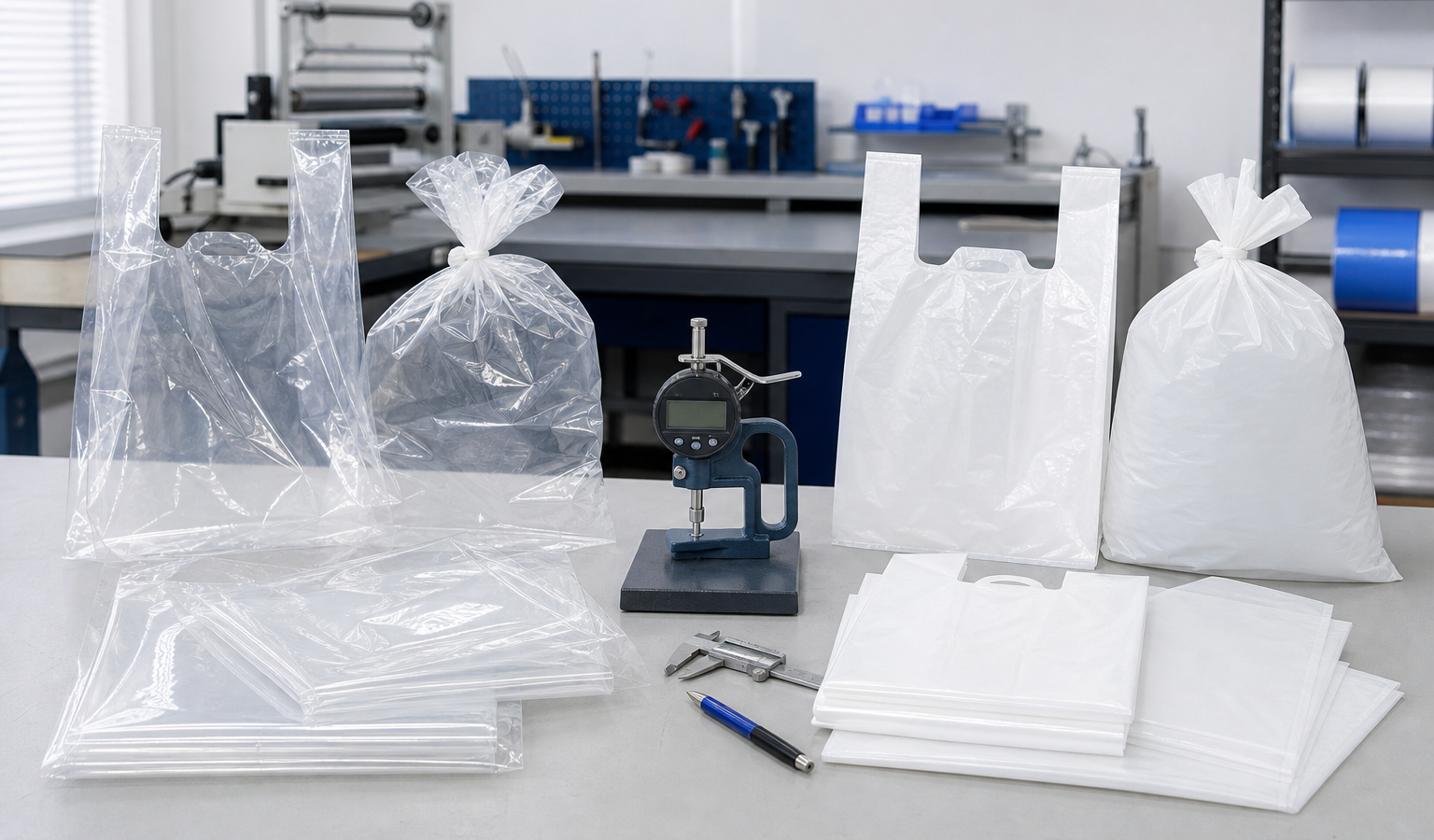
Choosing a plastic bag specification is a technical purchasing decision. The material, dimensions, micron, sealing method and print process must match the packed product and the way it will be filled, stored and transported.
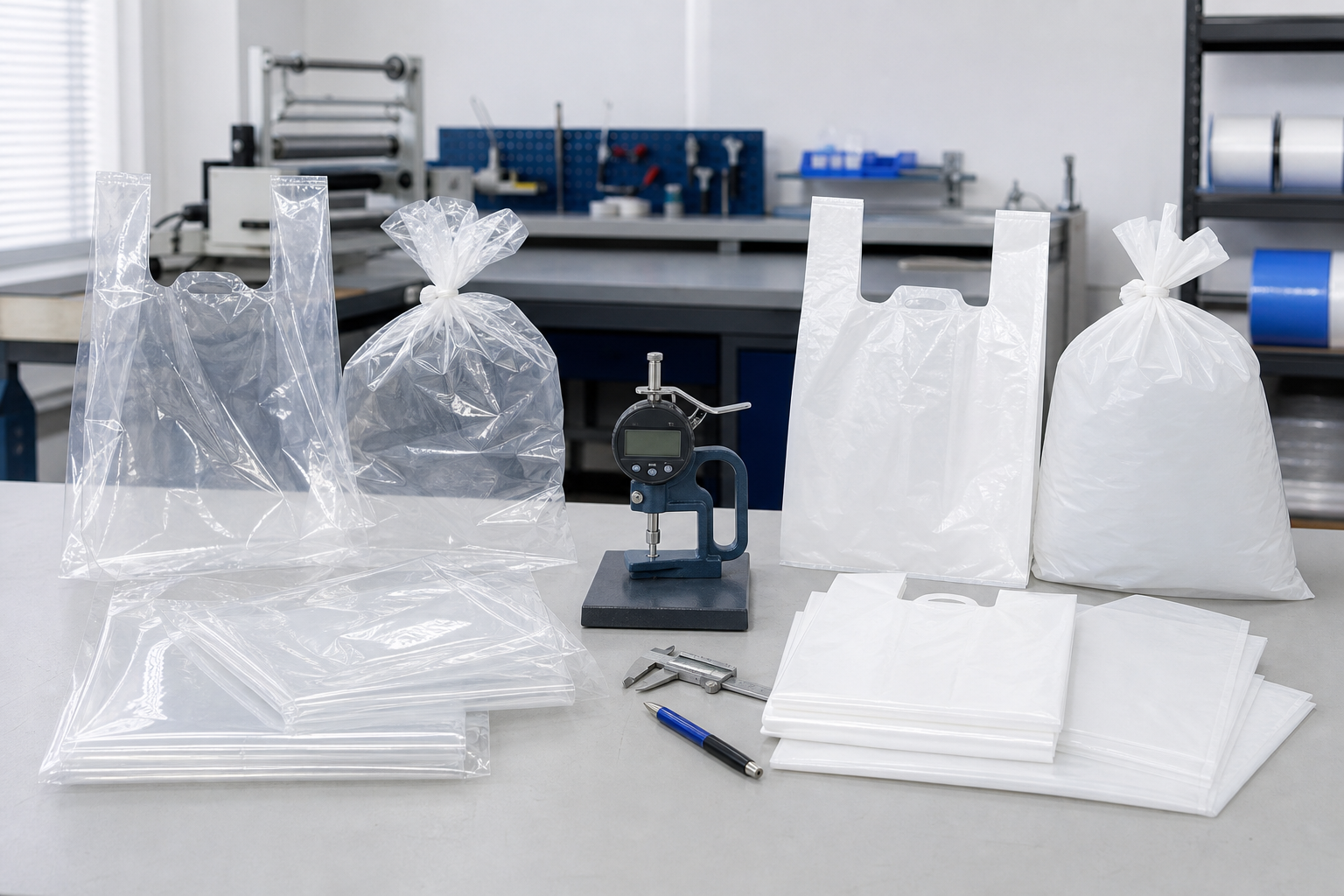
Start with the product and handling conditions
Document what will be packed, its filled weight, sharp edges, temperature, moisture sensitivity, storage period and handling method. A lightweight garment bag and a heavy industrial liner should not use the same construction simply because their external dimensions are similar.
Choose LDPE or HDPE plastic bags
When LDPE is useful
LDPE plastic bags are commonly selected when transparency, softness, puncture resistance and flexible sealing are important. Typical uses include garment packaging, food-contact applications, component bags and industrial liners. Buyers comparing manufacturing options can also review Tanvir Packages’ LDPE and HDPE rolls and polybags and its dedicated LDPE liner bag specifications.
When HDPE is useful
HDPE plastic bags provide a crisp feel and good tensile strength at comparatively low film weight. They are widely used for shopping bags, general commercial packaging and high-yield applications. Always compare samples at the same functional load rather than comparing micron alone.
Specify bag dimensions correctly
Record the bag width, overall length and any side or bottom gusset. Allow enough space for product depth, loading clearance, sealing and closure. A gusset changes usable volume, so it should not be omitted from an RFQ. Use our plastic bag size guide and confirm dimensions on a physical sample before production.
Select micron using testing, not guesswork
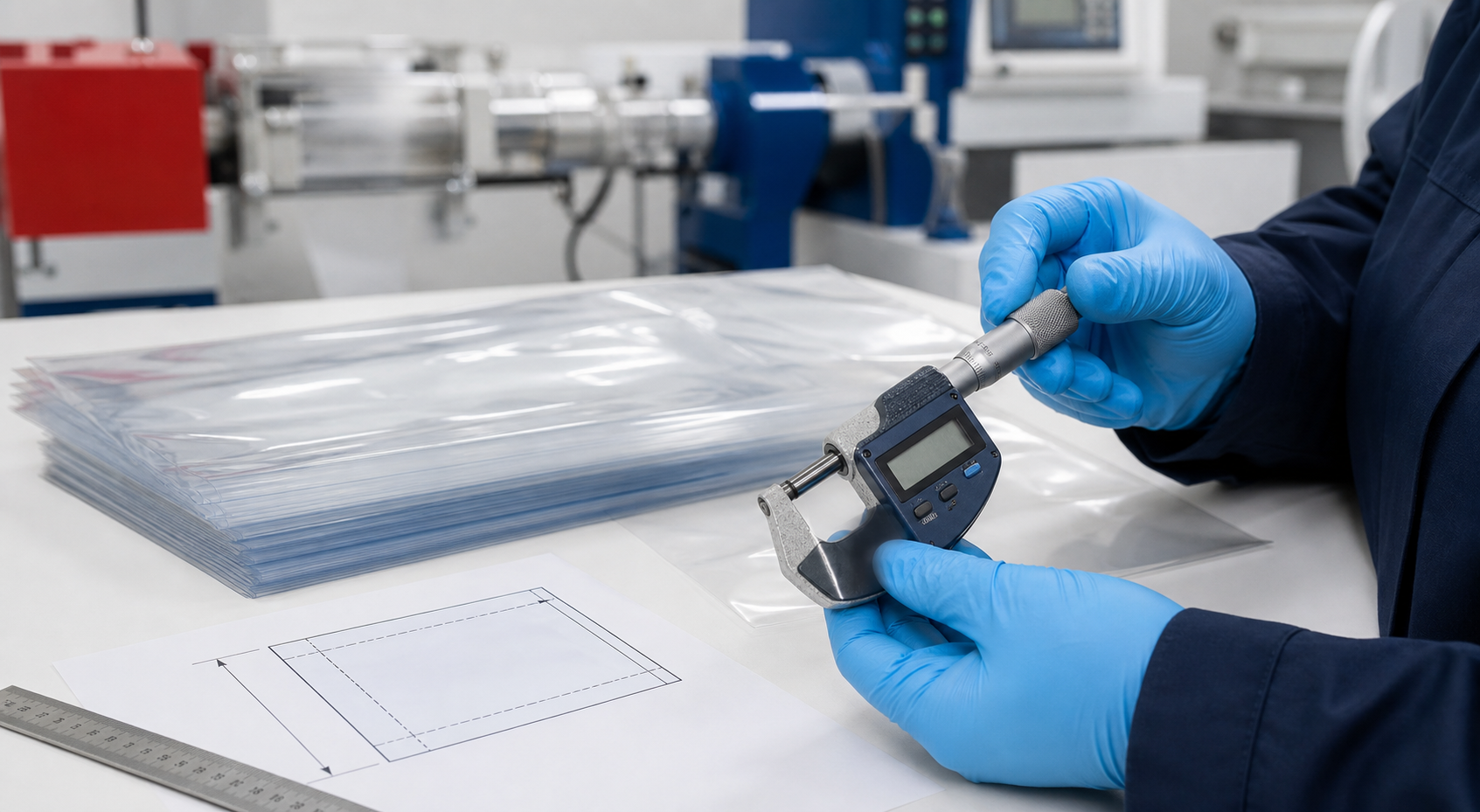
Micron describes nominal film thickness, but performance also depends on resin grade, blend, extrusion consistency, seal quality and bag construction. Use the micron-to-gauge converter when comparing international specifications, then calculate theoretical consumption with the plastic bag weight calculator and pieces-per-kilogram calculator.
Choose the correct sealing and bag construction
Bottom-seal, side-seal, gusseted, wicketed, perforated and resealable formats solve different production problems. Review our bottom-seal versus side-seal comparison. For resealable packaging, see both our zip-lock bag guide and the manufacturer reference for zip-lock bags from Tanvir Packages.
Printing and branded packaging
Printed bags require artwork dimensions, number of colours, print coverage, repeat length, colour references and quantity. Flexographic printing is common for many polyethylene bags. More detailed production information is available in our plastic bag printing guide and Tanvir Packages’ custom printed polybag capabilities.
Shrink film and stretch film choices
For retail presentation and multipacks, compare our POF shrink film page with the FlexiHold POF shrink film manufactured by Tanvir Packages. For pallet stabilization and transit protection, review the manufacturer’s PE stretch roll and stretch-film application guide.
Prepare a complete plastic bag RFQ
Include the material, dimensions, micron, colour, printing, bag style, quantity, packed product, filled weight, delivery location and expected usage. Attach a current sample, photograph or drawing. Where performance matters, request a sample for a real packing trial.
Request a structured plastic bag quotation or visit the Tanvir Packages polybag quotation page for manufacturer-level enquiries.