
October 19, 2026 · Packaging Guides
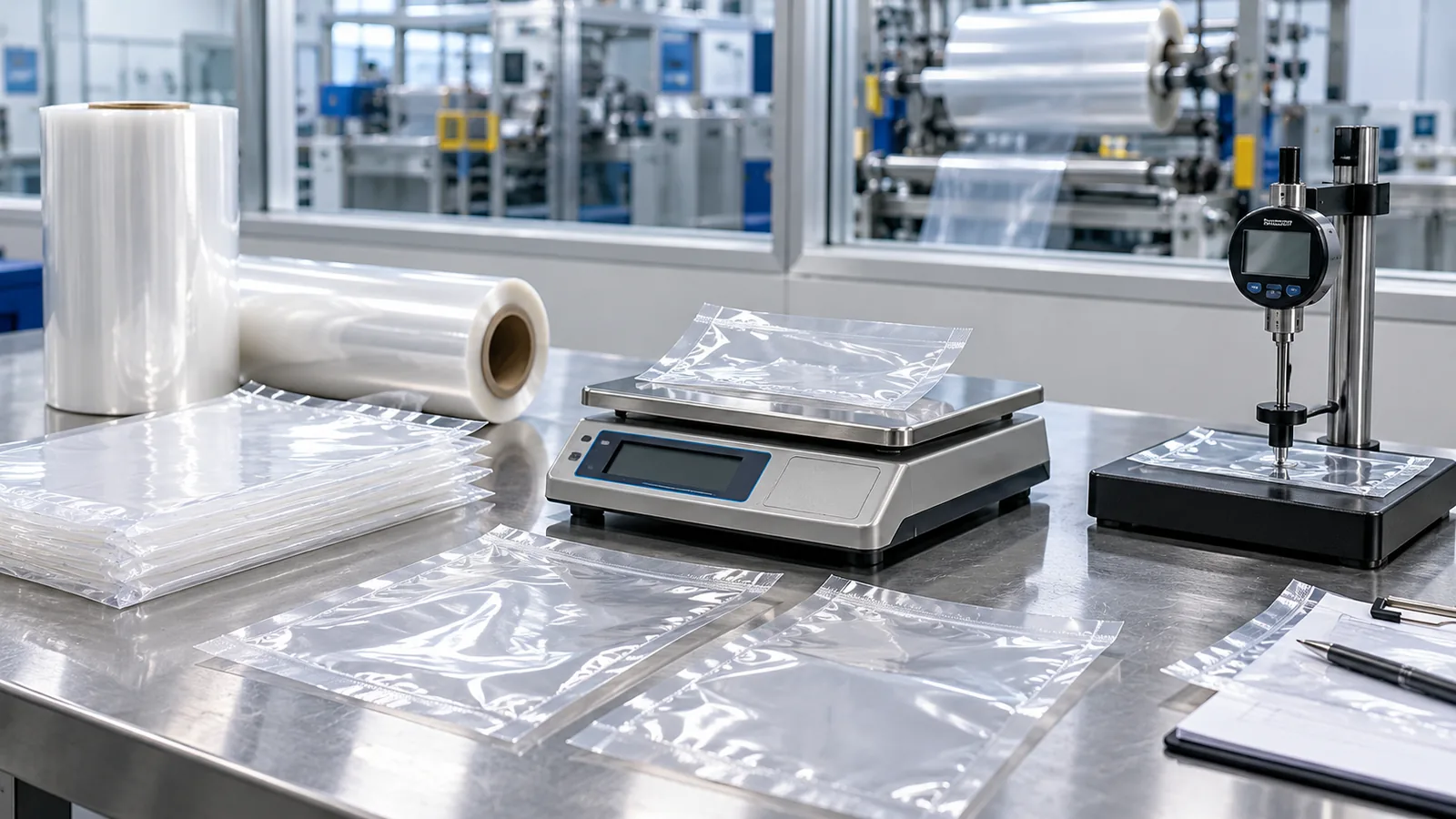
If you are comparing the food-grade plastic bags price per kg in Pakistan, the most useful answer is not a single number. The rate can change with the resin market, bag dimensions, micron, material specification, colour, printing, quantity and delivery terms. Two suppliers can quote the same price per kilogram yet offer a very different number of bags, because one bag may be heavier than the other.
For food packaging, price is only one part of the decision. The buyer also needs an agreed food-contact specification, consistent thickness, clean conversion, reliable seals and traceable production. This guide explains how to compare kilogram rates, estimate pieces per kilogram and prepare an RFQ that produces a usable quotation rather than a vague price.
Quick answer: what determines the 1 kg bag price?
A current quote normally depends on five groups of information:
- Bag dimensions: finished width, length and gusset, if any.
- Film specification: LDPE, LLDPE, HDPE or another approved structure, plus micron per wall.
- Food and process conditions: the packed product, direct-contact status, filling temperature, storage temperature and sealing method.
- Conversion and presentation: flat or gusseted construction, seal type, plain or printed film, colour and packing method.
- Commercial requirement: kilograms or pieces per size, repeat demand, delivery city and required date.
Because resin and conversion costs can move, a dated supplier quotation is more reliable than an old online rate. Plastic Bags Karachi does not publish an invented “today’s price.” Send a complete specification through the structured quotation form or call 0371 2050010 for a current, specification-matched rate.
Price per kilogram is not the same as price per bag
Buying by kilogram is common because film consumption is closely related to material weight. However, food processors usually consume bags by the piece. The commercial comparison therefore needs both figures:
- quoted price per kilogram;
- theoretical and confirmed pieces per kilogram;
- effective price per usable bag;
- packing quantity and production tolerance;
- rejected or unusable bags during filling and sealing.
The basic relationship is:
Estimated price per bag = quoted price per kg ÷ estimated pieces per kg
If one supplier offers a lower kilogram rate but supplies thicker, larger or heavier bags than required, the buyer may receive fewer bags per kilogram. If another quote uses an unrealistically low micron, the apparent saving may create punctures, seal failures or product loss. Compare the full specification before comparing the rate.
How many plastic bags are there in 1 kg?
There is no fixed answer. Bag weight changes with size, micron, density, gussets, seals, handles and printing. For a simple flat polyethylene bag, a planning estimate can be calculated from film area, two bag walls, nominal micron and an assumed material density.
The examples below use an illustrative polyethylene density of 0.92 g/cm³. They are planning estimates only, not a production guarantee.
| Flat bag size | Nominal micron per wall | Theoretical weight per bag | Approximate pieces per kg |
|---|---|---|---|
| 200 × 300 mm | 25 micron | 2.76 g | 362 |
| 250 × 350 mm | 30 micron | 4.83 g | 207 |
| 300 × 450 mm | 50 micron | 12.42 g | 81 |
| 450 × 600 mm | 75 micron | 37.26 g | 27 |
Real output can differ because of resin blend, gauge tolerance, seal allowance and conversion. Gusseted bags require the opened width to be treated correctly; handles and special constructions change the calculation. Use the plastic bag weight calculator and pieces-per-kilogram calculator for a first estimate, then ask the supplier to confirm the production basis in writing.
What “food-grade plastic bag” should mean in an RFQ
“Food grade” should not be treated as a colour, a marketing label or a synonym for a clear bag. A buyer should define the food, conditions of use and evidence required for the particular application.
The US FDA describes food-contact substances as packaging components that contact food without being intended to have a technical effect in the food. Its guidance also separates conditions such as room-temperature, refrigerated and frozen storage. These are useful technical references, but the buyer must confirm the regulations and documentation applicable to the actual market and product: FDA food-packaging overview and FDA food types and conditions of use.
Ask the supplier to record:
- whether the package has direct or indirect food contact;
- food type, including whether it is dry, moist, acidic, oily or fatty;
- filling and sealing temperatures;
- ambient, chilled or frozen storage;
- intended storage duration and distribution conditions;
- agreed resin, additives, colour and recycled-content restrictions;
- batch identification, cleanliness controls and required declarations or test reports.
Do not assume that every LDPE, HDPE or transparent bag is suitable for every food. Review the food-grade plastic bags product page and the food and beverage packaging application page before requesting a rate.
The main factors behind LDPE bag price per kg
| Price factor | Why it changes the quotation | What the buyer should specify |
|---|---|---|
| Resin and formulation | Resin grades, additives and market costs differ | Required material controls and approved sample |
| Micron | More thickness normally means more material per bag | Micron per wall, not an unclear “double micron” |
| Size and gusset | Film area controls bag weight and yield | Finished width × length × gusset in mm |
| Seal and conversion | Side seals, bottom seals, perforation or handles use different processes | Drawing, sample or clear construction note |
| Colour and opacity | Masterbatch and changeovers affect cost and MOQ | Clear, natural, milky, coloured or opaque |
| Printing | Plates/cylinders, ink, coverage and setup add cost | Artwork, colours, print sides and repeat |
| Quantity | Longer runs can distribute setup cost more efficiently | Quantity per size in kg and pieces |
| Packing and delivery | Cartons, bundles, freight and urgent dispatch affect the landed rate | Packing unit, destination and required date |
How food businesses should compare supplier quotations
Put every offer into one comparison sheet. Do not compare a verbal rate from one supplier with a technical quotation from another. Each line should show the same bag size, micron, material, colour, seal, quantity, packing and delivery basis.
Check these points before selecting the lowest figure:
- Is micron stated per wall and is tolerance identified?
- Are width, length and gusset finished dimensions?
- Is the kilogram figure net film weight or does it include cartons and cores?
- Is the estimated piece yield shown?
- Are food-contact declarations or tests included where required?
- Are printing setup charges, plates or cylinders separate?
- Are taxes, freight and unloading included or excluded?
- Is the quote valid for a stated period?
- Is the production and delivery lead time written?
- Will the supplier approve a sample or trial before the full run?
For repeat buying, retain an approved bag sample and a signed specification. When a new quote arrives, compare the sample, actual dimensions, measured thickness, net weight and sealing performance—not only the supplier’s product name.
Should you buy by kilograms or pieces?
Buying by kilograms helps control total film weight. Buying by pieces helps production teams plan filling output. A strong purchase order can include both: the ordered kilograms, expected piece range, nominal bag weight and agreed tolerance.
For low-volume stock bags, a piece or packet price may be practical. For custom food bags, kilogram-based manufacturing with a calculated yield is often easier to audit. Printed bags may also have run-length, artwork and colour constraints that make the order more complex than a plain-bag kilogram rate.
RFQ checklist for today’s food bag rate
Send the following in one message:
- company and contact name;
- food or ingredient being packed;
- direct or indirect contact;
- bag width, length and gusset;
- micron per wall or an existing sample;
- material or required performance if material is undecided;
- filling temperature, storage temperature and expected storage period;
- seal style and packing process;
- plain or printed, including artwork and colour count;
- kilograms or pieces required for each size;
- monthly or annual repeat demand;
- delivery city and required date;
- documents or testing that your quality team requires.
If dimensions or micron are not confirmed, use the packaging specification lab before submitting the RFQ.
Manufacturer resources for food-grade polybags
Before comparing a per-kilogram rate, review Tanvir Packages’ guidance on 1 kg packing-bag pricing in Pakistan, its food-packaging manufacturing options, and its food-grade and Halal packaging information. Confirm resin, thickness, dimensions, food-contact conditions and quantity in writing.
Order custom food-grade polybags—start with a specification-based RFQ
Need another specialty film? Contact Plastic Bags Karachi for specialty-film specification support or call 0371 2050010.
Frequently asked questions
What is the food-grade plastic bags price per kg in Pakistan today?
There is no responsible universal rate because resin costs and specifications vary. Request a dated quote for the exact size, micron, material, quantity and delivery terms. A rate without those details cannot be compared reliably.
How many food-grade bags come in 1 kg?
It depends on the weight of one finished bag. Divide 1,000 grams by the measured or theoretical bag weight. Gussets, handles, seals and thickness tolerance can change the actual count.
Is the cheapest bag per kg also the cheapest per piece?
Not necessarily. A heavier bag gives fewer pieces per kilogram. Calculate the effective piece cost and confirm that performance is suitable for the food and packing process.
Can recycled plastic be used for food packaging?
Do not decide from appearance or price alone. Suitability depends on the exact material, process, intended food-contact use and applicable regulatory evidence. State the food-contact requirement and ask for application-specific documentation.
Can I get printed food bags?
Printing can be reviewed after the film structure, bag format, artwork, colour count, print coverage, ink system and order quantity are known. See the plastic bag printing guide before artwork approval.
Request a specification-matched quotation
For a current food-packaging rate, send the size, micron, product, quantity and delivery details through the Plastic Bags Karachi RFQ. You can also call or WhatsApp 0371 2050010, or email inquiries@plasticbagskarachi.com. The useful comparison is not simply “price for 1 kg”; it is the cost of the correct, usable bag for your packing line.